John Beale[1] in 1656 described three types of pear, those that made a weak, sweet drink that would keep for only a relatively short time, those that were inclined to produce a roapy (sic) perry and two pears, Barland and a Horse pear that we would today recognise as perry varieties. It seems very likely that the pears he first described were the sweet early pears now often called Gennet (Jennet), Hedge or Harvest pears. At much the same time authors such as Evelyn and Worlidge described the practice of adding crab apples to early sweet pears to make a quick maturing perry. This ‘Harvest’ perry is a drink with an even longer ancestry than craft perry.
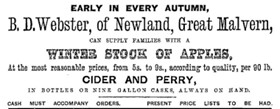
Baron Webster[2], in 1878 wrote that few Worcestershire homesteads are without some Early Jennet trees, which still bear bountifully, though of an enormous age, and that these earliest pears ripen about August 1st.
As production moved to the factory, both cider and perry makers needed fruit that was both larger, to ease harvesting and more particularly that would travel from orchard to mill without loss of juice. The early maturing jennet, harvest and squash varieties lost favour and were either ignored, removed or more regrafted with later vintage quality perry varieties. Many of these earlier perry pears were lost, despite being described in 1813 as yielding the highest flavoured liquor by William Pitt[3].
In 1796, William Marshall records in Rural Economy of Gloucestershire, that a drink still being made by mixing early sweet pears with wild crab apples. With passage of time this harvest drink improved, as farmers found it easier to recruit labourers at the autumn ‘mop’ fairs if they had a reputation of providing good cider or perry. Harvest cider and perry, produced by a quick fermentation, was ready within a month and lasted into the following year. The making of “workforce perry” probably ended with the reduction of the farming workforce, which was needed both to make and consume it!
The perry counties are today rightly proud of their craft-made perry using defined perry varieties, but the drink produced from early Hedge, Harvest or Gennet varieties mixed with crab apples or chance seedlings found in hedges and made for the workforce before the true perry varieties ripen, has a place in the perry story.
[1] Beale J Herefordshire Orchards, a Pattern for all England 1656
[2] Webster Baron D. The Orchards of Hereford and Worcester reported in Woolhope Naturalists’ Field Club transactions 1881 p.147
[3] Pitt W. General View of the Agriculture of the County of Worcester 1813